 Binance TR review
 Bitkub review
 Indodax review
 Japan
 South Korea
 Taiwan
 Hong Kong
 Philippines
 Vietnam
 Malaysia
 Singapore

On this page
Terra Classic (LUNC) has a large following across Asia, but where you live decides almost everything about how you can buy it. Of the eleven markets we cover, from Turkey in the west to Japan in the east, only three have an order book that pairs LUNC with the local currency: the Turkish lira, the Thai baht and the Indonesian rupiah. In the other eight, nobody quotes LUNC against the won, the yen, the peso or the dollar of Singapore, Hong Kong or Taiwan.
That split is not about demand. Korea was Terra’s home market and its keyword volume is huge. It comes down to regulation, listing rules and what happened in May 2022. Below you will find a comparison of all eleven markets, the reasons the map looks the way it does, a short tour of taxes, and a guide to reading our country pages. Pick your country on the map above or from the tiles below to go straight to the detail.
The 11 markets at a glance
The table sums up the one question most readers ask first: can I buy LUNC with my own currency on a local, regulated platform? The “regulator” column names the body that licenses or registers crypto exchanges, which is the body whose warnings you should read before using any offshore platform.
| Country | Local LUNC pair | Regulator | Note |
|---|---|---|---|
| Turkey | Yes: LUNC/TRY | SPK (Capital Markets Board) | Largest local-fiat LUNC market |
| Japan | No | FSA, JVCEA | No registered venue handles LUNC |
| South Korea | No | FSC, KoFIU | Won exchanges delisted it in 2022 |
| Taiwan | No | FSC (AML registration) | MAX and BitoPro: no LUNC |
| Hong Kong | No | SFC | Retail limited to large-cap tokens |
| Philippines | No | BSP, SEC | Coins.ph: no LUNC |
| Vietnam | No | Ministry of Finance | No exchange licensed yet |
| Thailand | Yes: THB on Bitkub | SEC Thailand | Listed under the LUNA ticker |
| Malaysia | No | Securities Commission | No registered DAX shown to list it |
| Singapore | No | MAS | No licensed venue checked lists it |
| Indonesia | Yes: IDR on Indodax | OJK | Thin IDR book; USDT pairs too |
Read the “Yes” rows carefully. A local pair does not always mean a local order book: the Turkish LUNC/TRY market on Binance TR shares its order book with Binance’s global LUNCTRY market. A “No” row does not mean LUNC is illegal to own. It means no locally licensed venue we checked lists it, so residents who want it end up on offshore exchanges, with the extra risk that brings.
Where local-currency pairs exist
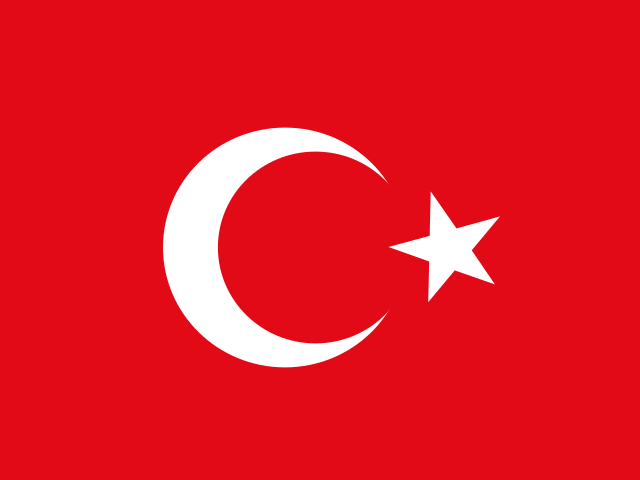
Turkey is the standout. LUNC/TRY is the largest local-currency LUNC market in the world, larger than any USD or EUR pair. In the snapshots we took for our research it carried roughly a third of Binance’s whole LUNC spot volume. Binance TR, the Turkish Binance entity on the SPK’s provisional operating list, lists LUNC_TRY on the same shared book. BtcTurk and Paribu, the best-known local brands, do not list LUNC at all. Our Turkey guide explains the lira route in detail.
Thailand has the second-largest local-fiat book. Bitkub, an SEC-licensed exchange, lists Terra Classic under its old ticker, LUNA_THB, a pair it has run since February 2022. The exchange’s own API describes it as “Thai Baht to Terra Classic (LUNC)”. Binance TH, also licensed, offers LUNC/USDT but no baht pair. See the Thailand guide.
Indonesia is the third. LUNC sits on the official CFX crypto asset list, and Indodax runs a LUNC/IDR pair, but it is very thin: daily turnover is often in the low thousands of dollars. Most Indonesian LUNC trading happens on LUNC/USDT at Tokocrypto and Bittime. Pintu, by contrast, delisted LUNC and converted leftover balances in 2023. The Indonesia guide covers the details.
Why Korea and Japan have none
The two biggest crypto markets in East Asia have no LUNC market at all, for opposite reasons. Korea removed it. All five won exchanges, Upbit, Bithumb, Coinone, Korbit and Gopax, ended LUNA trading between 16 May and 3 June 2022, as the coin collapsed. None has relisted LUNC since, and we confirmed that none of their public market lists carries LUNC, LUNA or USTC. The South Korea guide walks through each delisting date and Upbit’s pledge to return 239.13 BTC of LUNA trading fees to investor protection.
Japan never let it in. Japanese exchanges must register with the Financial Services Agency, and each one publishes the assets it handles. None of the registered firms, including Binance Japan, handles LUNC. The JVCEA, the industry’s self-regulatory body, keeps a sheet of current and formerly handled assets, and it has no LUNA, LUNC or USTC row. LUNC is also absent from the JVCEA Green List. The Japan guide explains what that means for residents, including tax.
The practical outcome is the same in both countries: residents who want LUNC have to use offshore exchanges that are not registered at home. Both governments warn against that, and Korea goes further by blocking apps and websites of unreported exchanges.
How regulation differs across the region
It helps to sort the eleven markets into three groups. The first group has local rules and a local LUNC listing. Thailand licenses exchanges under its 2018 digital asset decree, and Bitkub and Binance TH both carry LUNC. Indonesia moved crypto supervision from Bappebti to the OJK in January 2025, and LUNC is on the approved asset list. Turkey brought crypto platforms under the SPK with Law 7518 in July 2024, but its list of platforms is still a provisional one, and the SPK states that being on it is not an authorisation.
The second group has strict gatekeepers and no LUNC listing. Japan’s FSA register and JVCEA screening are the tightest in the region. Hong Kong’s SFC lets retail investors trade only “eligible large-cap” tokens on licensed platforms, and LUNC is very unlikely to qualify. Singapore’s MAS licenses a set of platforms, none of which we could confirm lists LUNC, and it bans public crypto marketing.
The third group is registration regimes that push residents offshore. Korea requires exchanges to report to KoFIU and work with a real-name bank account; LUNC is on none of them. The Philippines splits oversight between the BSP and the SEC, and has blocked or removed many offshore exchange apps. Taiwan requires AML registration with its FSC and has passed a licensing law that is not yet in force. Malaysia’s Securities Commission registers a short list of exchanges, none shown to list LUNC. Vietnam is a special case: a pilot licensing regime exists, but no exchange had been licensed in the latest sources we found, so no Vietnamese venue can list anything yet.
Taxes across the region
Tax treatment varies more than prices do, and in several countries it depends on the venue. Thailand exempts individuals’ crypto capital gains from 2025 to 2029, but only for trades made through SEC-licensed businesses. Indonesia charges a 0.21% final tax per transaction on domestic licensed platforms and 1% on foreign ones. Vietnam has set a 0.1% tax on each transfer’s value through licensed providers, although none is operating yet.
Elsewhere the rules are simpler or still pending. Japan taxes crypto gains as miscellaneous income at progressive rates, and its planned 20% flat rate is expected to cover only assets sold through domestic registered operators. Korea has scheduled a 22% tax on annual gains above ₩2.5 million from January 2027, with a further deferral under debate. Turkey had no crypto-specific tax in force when we checked, after a 2026 proposal was withdrawn. Singapore and Hong Kong do not tax capital gains for individuals unless trading amounts to a business, Malaysia has no capital gains tax for individual investors, and the Philippines and Taiwan treat gains as ordinary or property-transaction income. None of this is tax advice; each country page links the relevant authority.
The route when there is no local pair
In eight of the eleven markets the path looks the same. You buy a dollar stablecoin, usually USDT, with your local currency, move it to an exchange that lists LUNC/USDT, buy LUNC there, and ideally withdraw it to your own wallet. Our step-by-step buying guide covers each stage, and the exchange list shows which venues still carry LUNC after OKX dropped it in September 2025.
Two costs are easy to miss. First, every on-chain LUNC transfer pays the network’s burn tax, which governance set at 1.5% in August 2026 and can change by vote, on top of the exchange’s own withdrawal fee. Second, exchange deposits of LUNC need both a terra1… address and a memo; leave out the memo and the coins can be lost. Binance had LUNC withdrawals paused for wallet maintenance when we checked, so always confirm withdrawal status before you buy.
For the first step, the exchange behind our buttons, CEX.IO, has run since 2013 and sells USDT by Visa, Mastercard, Apple Pay or Google Pay after identity verification. It does not list LUNC, it has no local bank rails in Asia (cards are converted at your bank’s rate), and it is not available in Japan or Singapore. Asian users are served by CEX OVRS LLC, a St Kitts and Nevis company that holds no Asian licence, so check your own country’s rules first.

Get the USDT leg sorted
Buy USDT by card, then send it to an exchange that lists LUNC in your market. Not available in Japan or Singapore.
Local exchange reviews
We review the seven local venues that actually list LUNC, all in the three markets with local options. In Turkey: Binance TR, the only lira pair, and Bitlo, a local brand with a LUNC/USDT pair only. In Thailand: Bitkub, home of the LUNA_THB book, and Binance TH, which mirrors Binance’s LUNC/USDT liquidity. In Indonesia: Indodax with its thin LUNC/IDR pair, Tokocrypto and Bittime, both on LUNC/USDT.
Each review scores liquidity, fees, funding options and LUNC-specific handling such as memos and withdrawal status. We left out Bitazza: its LUNC feed belongs to Bitazza Global, which Thailand’s SEC charged in February 2026 with operating an unlicensed exchange.
 Check the pair
How to read our country guides
Every country page follows the same order, so you can compare markets quickly. It opens with what makes the country different for LUNC, then names the regulator and the legal status of exchanges. Next comes a table of local platforms that do or do not list LUNC, followed by local-currency pricing (the hero converter shows live values in your currency), funding options and the honest truth about peer-to-peer trading. Each guide ends with the tax position, a practical route and answers to the questions people in that market actually search for.
We use careful wording on purpose. “On the SPK list” is not the same as “licensed”. “Registered” in Taiwan or Korea is not the same as a full licence. When our research could not confirm a fact, such as a court verdict or a platform’s full coin list, we say so instead of guessing. Prices and volumes move every minute, so we describe them in relative terms and leave the live numbers to the widgets and our LUNC converter.
FAQ
In which Asian countries can I buy LUNC with local currency?
Only three of the eleven markets we cover have a local-currency LUNC pair: Turkey (LUNC/TRY on Binance and Binance TR), Thailand (Bitkub, where the pair is listed as LUNA_THB) and Indonesia (LUNC/IDR on Indodax, which is very thin). Everywhere else you would need to buy USDT first and then trade it for LUNC.
Is there a LUNC/KRW or LUNC/JPY pair?
No. No exchange anywhere lists LUNC against the Korean won or the Japanese yen. Korean won exchanges delisted LUNA in May and June 2022 and never relisted LUNC, and no exchange registered with Japan’s FSA handles LUNC.
Why is LUNC called LUNA on some Asian exchanges?
Terra Classic kept the old LUNA ticker on a few venues after the 2022 split. On Bitkub and Kraken, LUNA means LUNC, while on Binance, BtcTurk, OKX and Indodax, LUNA means the newer Terra 2.0 coin. Check the price: LUNC trades around a thousand times lower than Terra 2.0.
Which Asian regulator is strictest about LUNC?
Japan and Hong Kong are the strictest in practice. No FSA-registered exchange in Japan handles LUNC, and Hong Kong only lets retail investors trade eligible large-cap tokens on SFC-licensed platforms, none of which lists LUNC. South Korea and the Philippines actively block offshore exchange apps and websites.
Do I pay tax on LUNC gains in Asia?
It depends on the country and often on the venue. Thailand exempts individual gains made through SEC-licensed venues until the end of 2029, Indonesia charges a small final tax per transaction, Japan taxes gains as miscellaneous income, and Turkey had no crypto tax in force when we checked. Our country guides cover each market in detail.
Sources
- SPK — list of operating crypto-asset service providers · regulator register
- FSA — register of crypto-asset exchange service providers (PDF) · regulator register
- Bitkub — public market symbols API · exchange API
- CFX — Indonesian crypto asset list (LUNC) · official asset list
- SEC Thailand — digital asset business licence check · regulator register
- SFC — lists of virtual asset trading platforms · regulator register
- CoinGecko — Terra Luna Classic markets · market aggregator