 Binance TR review
 Bitkub review
 Indodax review
 Japan
 South Korea
 Taiwan
 Hong Kong
 Philippines
 Vietnam
 Malaysia
 Singapore

On this page
LUNC is the coin of Terra Classic, the blockchain that was simply called Terra until it collapsed in May 2022. After the crash, a brand-new chain took the old name and the LUNA ticker, while the original network was renamed Terra Classic and its coin became LUNC. The chain never stopped. Its community kept it alive, and LUNC is still what you use to pay fees, stake with validators, vote on proposals and move value across the network.
There is no company behind LUNC and no promise of any price. The supply sits at around 6.4 trillion coins, down from a peak of about 6.9 trillion, and every taxed transfer burns a small slice. That makes LUNC an unusual asset: part working blockchain, part community rescue project, part speculative trade. This guide explains each of those parts in plain words, so you can judge it for yourself.
What the name LUNC means
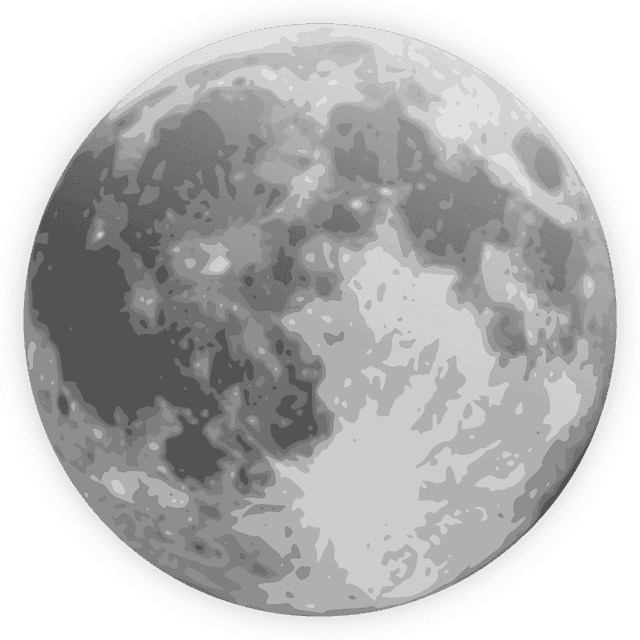
The name comes from Latin. Terra means Earth and Luna means Moon, so the original project paired a blockchain called Earth with a coin called Moon. The full moon in the picture at the top is a small nod to that. Before May 2022 the coin was LUNA and the chain was Terra. When the network failed, governance voted to start a new chain, and that new chain kept the LUNA ticker.
The old coin needed a new label. It became Luna Classic, ticker LUNC, and the chain became Terra Classic. The chain ID did not change: it is still columbus-5, the same network that was running before the crash. So when people search for "Terra Luna Classic", "Luna Classic" or "LUNC", they mean the same thing.
One trap catches many beginners. Some exchanges never adopted the new ticker. Kraken and Bitkub still list Terra Classic as LUNA, while Binance uses LUNA for the newer Terra 2.0 coin. The name on the screen does not tell you which coin you are buying. Compare the price with our live LUNC price page before you place an order: the two coins trade at very different levels.
What LUNC does on the chain
LUNC is not just a ticker on an exchange. On Terra Classic itself it does five concrete jobs, and each one connects to a part of the network you can check on-chain. Flip the cards for the short version, then read on for why each one matters.
Gas fees are the simplest job. Every action on Terra Classic, from a plain transfer to a vote, needs a little LUNC to pay the network. Staking is the security layer. Terra Classic is a proof-of-stake chain, so blocks are produced by validators, and holders back them by delegating LUNC. Inflation is set to zero, which means rewards are not newly minted coins. They come mostly from the oracle pool plus fees. Our LUNC staking guide shows how the roughly 2% yearly reward is measured and why wallets showing 12–15% are wrong.
Governance turns staked LUNC into votes. If you stake and do not vote, your validator votes for you, but you can always override it. Oracle voting is a Terra-specific job: validators post exchange-rate data every few blocks, and those that stay accurate earn a share of the oracle pool. Validators that miss too many votes lose a small part of their stake and get jailed, which is one reason it pays to choose carefully on the validator page.
The burn tax is what most people have heard of. Governance set it at 1.5% through proposal 12223, which passed on 2 August 2026, and like every parameter it can change by vote. Here is a worked example. If you send 1,000,000 LUNC from one wallet to another, the tax is 15,000 LUNC. Of that, 12,000 LUNC is destroyed, 1,500 goes to the community pool and 1,500 to the oracle pool. Staking actions, IBC transfers and trades inside an exchange are not taxed. The full rule set, including its long history of rate changes, lives on our burn tax explainer.
Who runs Terra Classic
Nobody owns Terra Classic. Terraform Labs, the company that built Terra, moved its work to the new chain in 2022 and has been winding down since 30 September 2024. Terra 2.0 is now maintained by a separate group. Terra Classic was left to its holders, validators and volunteer developers, and that is still how it works.
The core code lives in the classic-terra GitHub organisation. Independent developers write upgrades, and some of them are paid from the community pool after a public vote. A major upgrade in April 2026 moved the chain to a modern Cosmos SDK version, and later patches fixed security issues and stuck transactions. You can follow that track on our network upgrades page.
Every meaningful decision goes through on-chain governance. The tax rate, the validator set size, spending from the community pool and even who may deploy smart contracts are all set by votes. Since proposal 12234 passed on 26 October 2026, only governance can approve new contract code. You can read any proposal yourself on a public explorer such as Terra Classic Finder.
The downside of no owner is that no single voice speaks for the chain. There is no official foundation and no official social account. Community sites like terra-classic.io say so openly. Treat any account that claims to be "the official LUNC team" with suspicion, and meet the people behind the revival on our community page.
How LUNC came to be
Terra launched in 2019 around a simple idea: an algorithmic stablecoin, UST, held at one dollar by a mint-and-burn link with LUNA. Holders could always swap one dollar of UST for one dollar of LUNA, and the other way round. It worked while demand grew. LUNA reached its all-time high of $119.18 on 5 April 2022.
On 7 May 2022 large UST sales pushed the stablecoin below its peg. Holders rushed to redeem UST for LUNA, the system minted LUNA to pay them, and the extra supply crushed the price, which caused more redemptions. Total LUNA supply went from roughly 725 million to about 6.9 trillion within three weeks. The chain was halted twice, on 12 and 13 May. On 25 May governance passed Proposal 1623, and on 28 May the new Terra 2.0 chain began. The old chain kept running as Terra Classic.
The legal story has since closed one chapter. Co-founder Do Kwon pleaded guilty in the United States and was sentenced to 15 years on 11 December 2025. Holding LUNC does not give anyone a claim on Terraform Labs' remaining assets. The full day-by-day account lives on our Terra Luna crash timeline.
How many LUNC exist
The short answer is a lot. Total supply peaked at about 6.907 trillion LUNC in late May 2022. Since then burns have removed roughly 462 billion coins, about 6.7% of the peak, which leaves around 6.4 trillion. The exact number changes every block, so check the live burn tracker instead of trusting a figure in an old article.
Where did the burns come from? Community trackers attribute roughly half to one large burn from a Terraform Labs wallet, about a fifth to Binance's monthly fee burns, and roughly a quarter to the on-chain tax. Those splits come from third-party dashboards, so treat them as estimates. What is certain is that no new LUNC is minted, so supply only goes down.
You will also see two different numbers on price sites. Total supply counts every coin on-chain. "Circulating supply" on aggregators such as CoinGecko is closer to 5.5 trillion, because it leaves out pools, staked coins and some large holders. Neither is wrong, but mixing them leads to bad math. Our LUNC supply guide explains the gap.
| Item | Terra Classic (LUNC) |
|---|---|
| Full name | Luna Classic, also Terra Luna Classic |
| Chain | Terra Classic, chain ID columbus-5 |
| Smallest unit | 1 LUNC = 1,000,000 uluna |
| Supply | About 6.4 trillion, peak about 6.907 trillion |
| New issuance | None, inflation set to 0% by governance |
| Burn tax | 1.5%, of which 80% is destroyed |
| Unstaking period | 21 days |
| Owner | None, run by on-chain governance |
LUNC, LUNA and USTC
LUNC has two close relatives, and confusing them costs money. LUNA, sometimes written LUNA 2.0, is the coin of Terra 2.0, the chain that launched on 28 May 2022. It was airdropped once to holders of the old chain, based on snapshots taken in May 2022. There is no swap and no bridge between LUNC and LUNA, and buying LUNC now gives no right to any LUNA. Our LUNC vs LUNA comparison puts the two side by side.
USTC is the former UST stablecoin, renamed TerraClassicUSD. It still exists on Terra Classic, but it trades far below one dollar. The on-chain swap between LUNC and USTC is effectively switched off, and USTC minting has been disabled by governance. The community has passed several signal votes about a future repeg, but none of them contains working code. Read what those plans would really require on our USTC page.

Curious enough to hold a little?
Most routes to LUNC start with USDT. Get some ready by card, move it to an exchange that lists Terra Classic and check its withdrawal status before you buy.
Why people still hold it
After a fall of more than 99.99%, why does anyone still hold LUNC? There are four honest reasons. The first is community. Thousands of holders, validators and builders decided not to abandon the chain, and for many of them LUNC is a long-running project they care about. The second is burns. A shrinking supply is easy to understand, and every monthly Binance batch and every taxed transfer keeps that story alive.
The third is speculation. LUNC moves fast. It rallied sharply in spring 2026, then gave much of it back. Traders like assets with big swings and big volume, and LUNC has both on its busy days. The fourth reason is the most dangerous one: the cheap per-coin price. When a coin costs a tiny fraction of a cent, a small budget buys millions of coins, and that feels like a bargain.
Psychologists call this unit bias: we judge an asset by the price of one unit, not by the value of the whole. Here is a hypothetical example. Say LUNC traded at $0.00005. Then $100 buys 2 million coins, which feels like a lot more than a tiny slice of one bitcoin. But the per-coin price only tells you how finely the pie is cut. At about 6.4 trillion coins, a $0.00005 price means a market cap of about $320 million. For your coins to double, the market would have to value the whole chain at about $640 million. For LUNC to reach $1, the market cap would need to be around $6.4 trillion. Our $1 market cap math runs those numbers live.
None of this makes LUNC good or bad. It just means the right question is never "how many coins can I get". It is "what would the whole network have to be worth for my plan to work". If you want a balanced look at where things could go, our page on whether LUNC can recover tackles that question.
The risks in plain words
LUNC carries every normal crypto risk plus a few of its own. Price is the obvious one. The coin is far below its 2022 high and can still lose most of its value in a bad month. Liquidity is concentrated on a handful of large exchanges, and some have walked away: OKX delisted LUNC in September 2025, and no South Korean exchange has listed it since 2022. Exchanges can also pause LUNC withdrawals, so check the status before you buy.
Governance is a risk too. Parameters you rely on can change by vote. The burn tax alone has moved from 1.2% to 0.2%, then to 0.5%, and since August 2026 it sits at 1.5%. Staking power is fairly concentrated: when we checked, just six validators together hold more than a third of the voting power. The app ecosystem is thin, with total value locked in Terra Classic apps under a million dollars, according to DefiLlama.
Finally, there are practical traps. The LUNA ticker confusion catches beginners every week. Wallet apps come and go: Leap, once popular for Cosmos chains, shut down on 28 May 2026. Scammers pose as official teams that do not exist. Put only money you can afford to lose into LUNC, and keep it in a wallet you control.
Getting and storing LUNC in Asia
Most people get LUNC on a centralised exchange. It trades against USDT on large venues such as Binance, Bybit, KuCoin, Gate, MEXC, Bitget and HTX, and Kraken lists it under the LUNA ticker. Local-currency pairs are rare. The usual route is to buy USDT, trade it for LUNC on an exchange that lists it, then withdraw to your own wallet. Our step-by-step buying guide covers the whole process, and the exchange list shows who lists what.
Once you withdraw, LUNC needs a wallet that speaks the Terra Classic network. Galaxy Station, run by the Hexxagon team, is the common choice for staking and voting. Keplr works too, and a Ledger can sign through the Terra app with Galaxy Station or Keplr. Trust Wallet and Atomic support LUNC but show staking rates far above reality. MetaMask cannot hold native LUNC at all, because Terra Classic has no EVM. The details, including which wallets to avoid, are on our LUNC wallets page.
Asia is where much of the LUNC story plays out. Turkey hosts the world's largest local-currency LUNC market, the LUNC/TRY pair; see our Turkey guide. Thailand comes next, with Bitkub listing Terra Classic as LUNA_THB, explained in our Thailand guide. Elsewhere the picture is harder: there is no KRW, JPY, PHP or VND pair at all, no Korean exchange has listed LUNC since 2022, and in Japan no FSA-registered exchange handles it. The Asia hub compares all eleven markets we cover.
FAQ
What is LUNC crypto in simple words?
LUNC is the native coin of Terra Classic, the original Terra blockchain that collapsed in May 2022 and is now run by its community. People use it to pay network fees, stake with validators, vote on proposals and send value on the chain. It has no company behind it and no fixed price target.
What does LUNC stand for?
LUNC stands for Luna Classic. Before May 2022 the coin was simply called LUNA. When a new Terra chain took the LUNA name, the original coin was renamed Luna Classic with the ticker LUNC. Terra means Earth and Luna means Moon in Latin.
Is Luna Classic the same as LUNC?
Yes. Luna Classic, Terra Luna Classic and LUNC all describe the same coin on the Terra Classic chain, chain ID columbus-5. Some exchanges such as Kraken and Bitkub still list it under the old ticker LUNA, so always check the full asset name.
What is LUNC coin used for?
LUNC pays gas fees on Terra Classic, secures the network when holders stake it with validators, and gives stakers a vote in governance. Validators also earn LUNC rewards from the oracle pool for submitting price data. Every taxed transfer burns part of the amount, which slowly shrinks the supply.
Who owns Terra Classic now?
Nobody owns it. Terraform Labs, the company that built Terra, is winding down and does not run the chain. Independent developers maintain the code on the classic-terra GitHub, and staked LUNC holders decide every upgrade and parameter change through on-chain votes.
Is LUNC a stablecoin?
No. LUNC is a volatile coin with no peg. The stablecoin of the old Terra system was UST, now renamed USTC, and it lost its dollar peg in May 2022. USTC swaps and minting are switched off on-chain, so it does not work as a stablecoin either.
Sources
- Terra Classic core code (classic-terra) · source code
- Terra docs — Terra 2.0 genesis, snapshots and the Classic rename · protocol documentation
- Terra Classic LCD — tax module params · on-chain parameter
- Terra Classic LCD — LUNC total supply · on-chain supply
- Terra Classic LCD — staking params · on-chain parameter
- Proposal 12223 — set the on-chain tax rate to 1.5% · governance record
- CoinGecko — Terra Luna Classic (LUNC) · market data